Last month, I spent a few days in New England. There’s something extraordinary about Fall in a place with four seasons – shortly after I returned to central Arizona, it finally dropped below triple digits!

I flew into Boston and spent a night in Cambridge because I was visiting with a friend from my teenage years/early adulthood who has been living there for a while now. I remember Katrina always wanted to end up in Boston, and I’m happy for her now that she’s successfully built a life there. We spent the evening near the MIT campus, stopping for ice cream at Toscanini’s before dinner because, according to Katrina, “Bostonians love their ice cream and have been reported to consume more of it per capita (especially in winter) than any other place in the United States”. Katrina ordered the goat cheese, honey, and pecan variety, which sounded really good, so I followed her lead. Delicious!
We walked around Cambridge, and Katrina shared facts about the local architecture and pointed out details I wouldn’t have otherwise noted. We walked around looking for a place to eat and landed at an all-you-can-eat hot pot establishment. It was very good, and we were very full. The next day, we walked over the bridge from Cambridge, and I ended up working remotely from a coffee shop on the Berklee College of Music campus – Boston has its share of higher education institutions, no doubt!
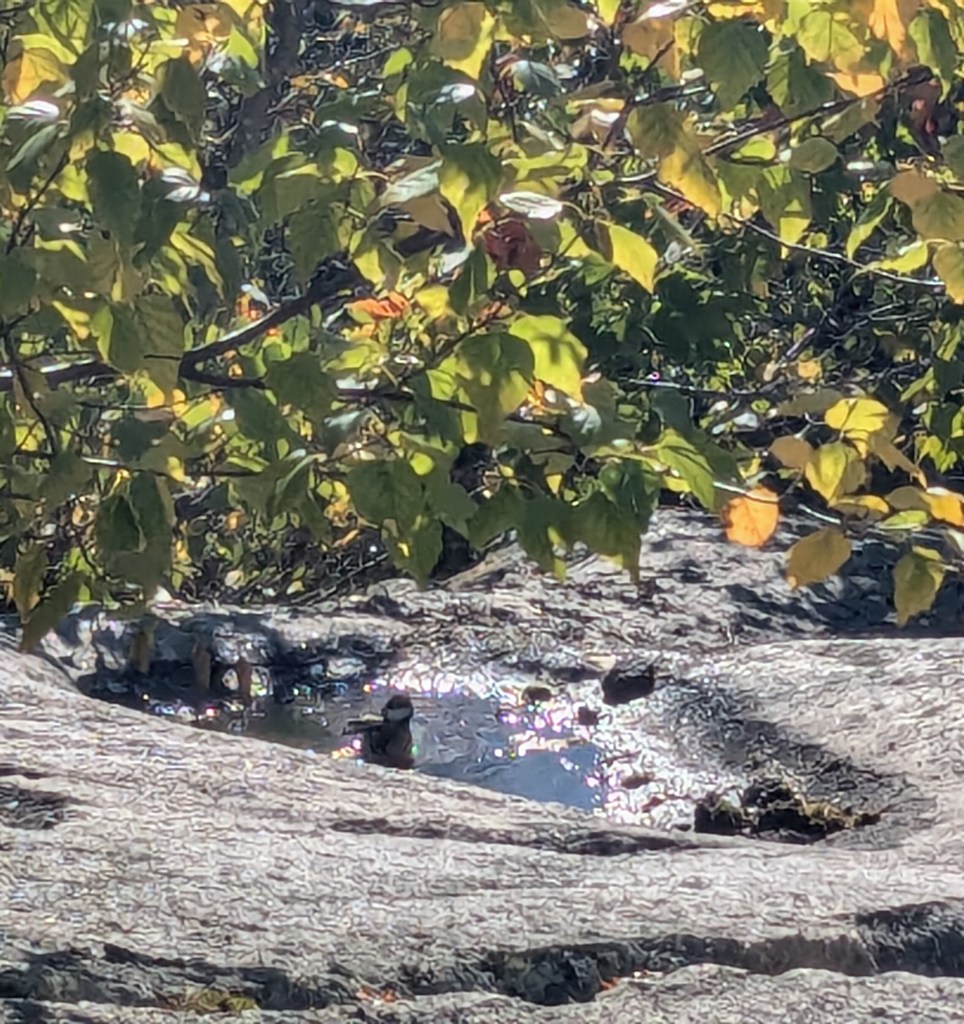
Some friends were joining me for the weekend in New Hampshire, the real purpose of the trip out East. We were to attend a rock climbing festival for women and genderqueer people called Flash Foxy Trad Fest in North Conway. We drove out to New Hampshire together and were to host a climbing meetup for the festival, but it had rained heavily the evening prior, and the rock was quite wet – too slippery for climbing on. Therefore, we decided to hike a short trail called Black Cap, and we saw a BLACK-CAPPED chickadee bathing in a puddle left from the previous night’s rain.
Our plan for the following day was to spend the day doing something called sport climbing (funny, because the festival is called “Trad Fest”, which is a different style of climbing). In sport climbing, a leader uses fixed hardware in the rock to run a rope up the wall and protect other “followers” who wish to climb the same route. Diedre was the leader for all of the routes we climbed that day – an amazing feat and a serious demonstration of skill and courage.
We did several easier routes that day and one more moderate route – not that climbing grades (which denote relative difficulty) are important, or even objective. The “easier” routes were actually a good level of difficulty for me but the “harder” route was a little to much for me in my current state. I decided to bail prior to completing it because I had already made it past the crux – or hardest part of the climb – and I was so exhausted both mentally and physically. I knew it’d be better for my general well being to be able to put myself on more horizontally oriented ground.
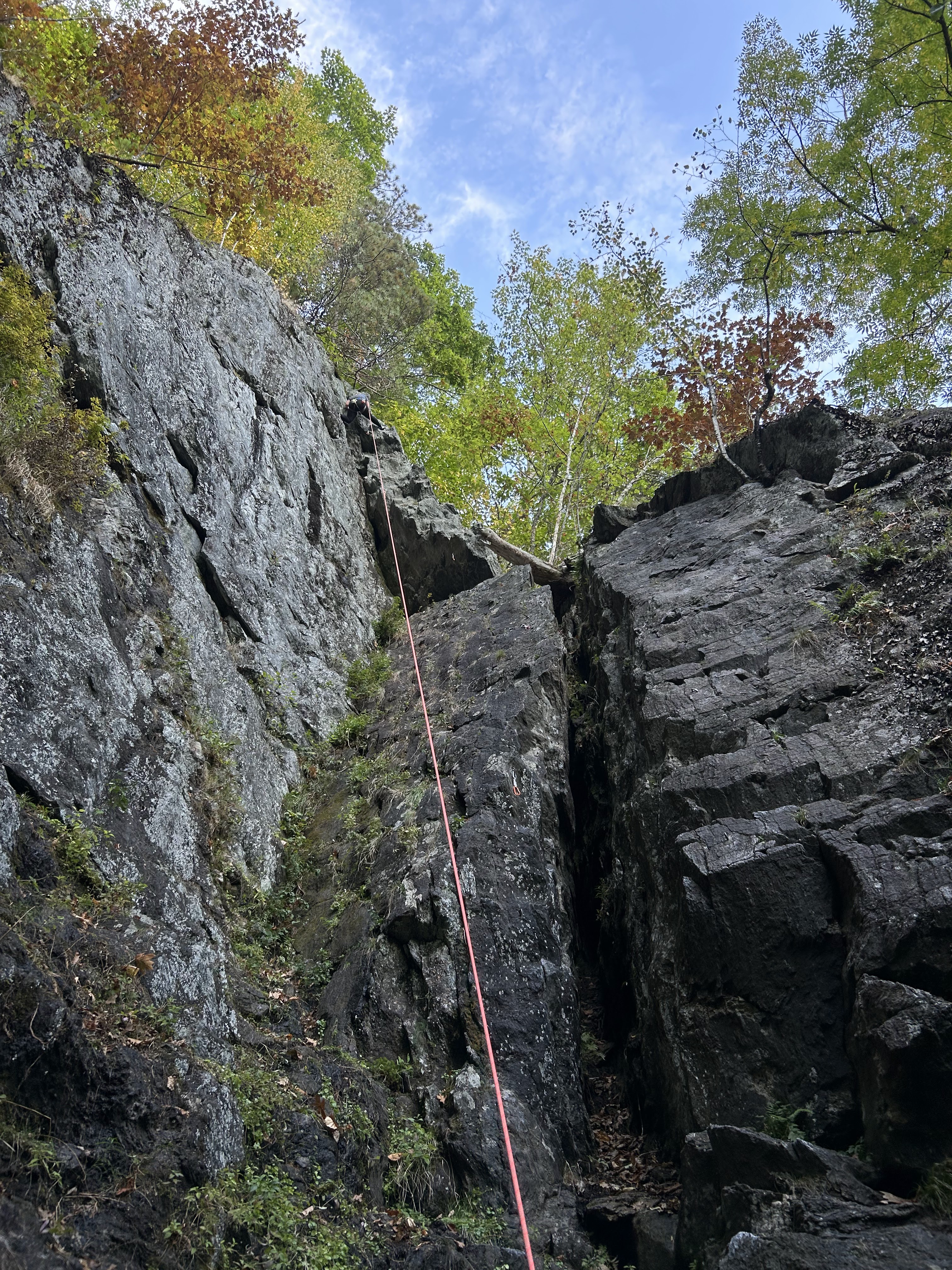
I took a much needed break, talked with my mother <3, and enjoyed a short nap. I returned to the crag and finished the climbing day with an easy – but really fun – route called “Shealyn’s Way”. It features a lot of different climbing styles and the route is relatively long for a single pitch (as far as one can go with a 60 meter long climbing rope). I felt all of the uncertainty that I had built up within me from the more difficult climb completely wash away.
The rock we were climbing is called schist. It’s a rock that has been “metamorphosed” under elevated temperatures and pressures which causes changes to it’s crystalline structure. The minerals in the rock orient themselves as a response to the stress that is applied to them and you end up with a rock that records this story of undergoing change under pressure. It’s like when you push down on a ball of play-dough and it flattens into a new shape in response to the applied force.

Metamorphic rocks have always been my favorite of the three rock types (igneous, metamorphic and sedimentary). I think it’s because these rocks record their history of undergoing stressful situations. These “situations” often involve great forces and large-scale dynamism that for me is awe-inspiring and exciting to attempt to comprehend. That storied history literally changes them and that’s what – in my opinion, anyway – makes them beautiful and interesting.
So when I have a tough time climbing a hard route or when I doubt my ability to accomplish hard things, I remember that personal challenges transform me into something also more beautiful and interesting.
 OROGENY ODYSSEY