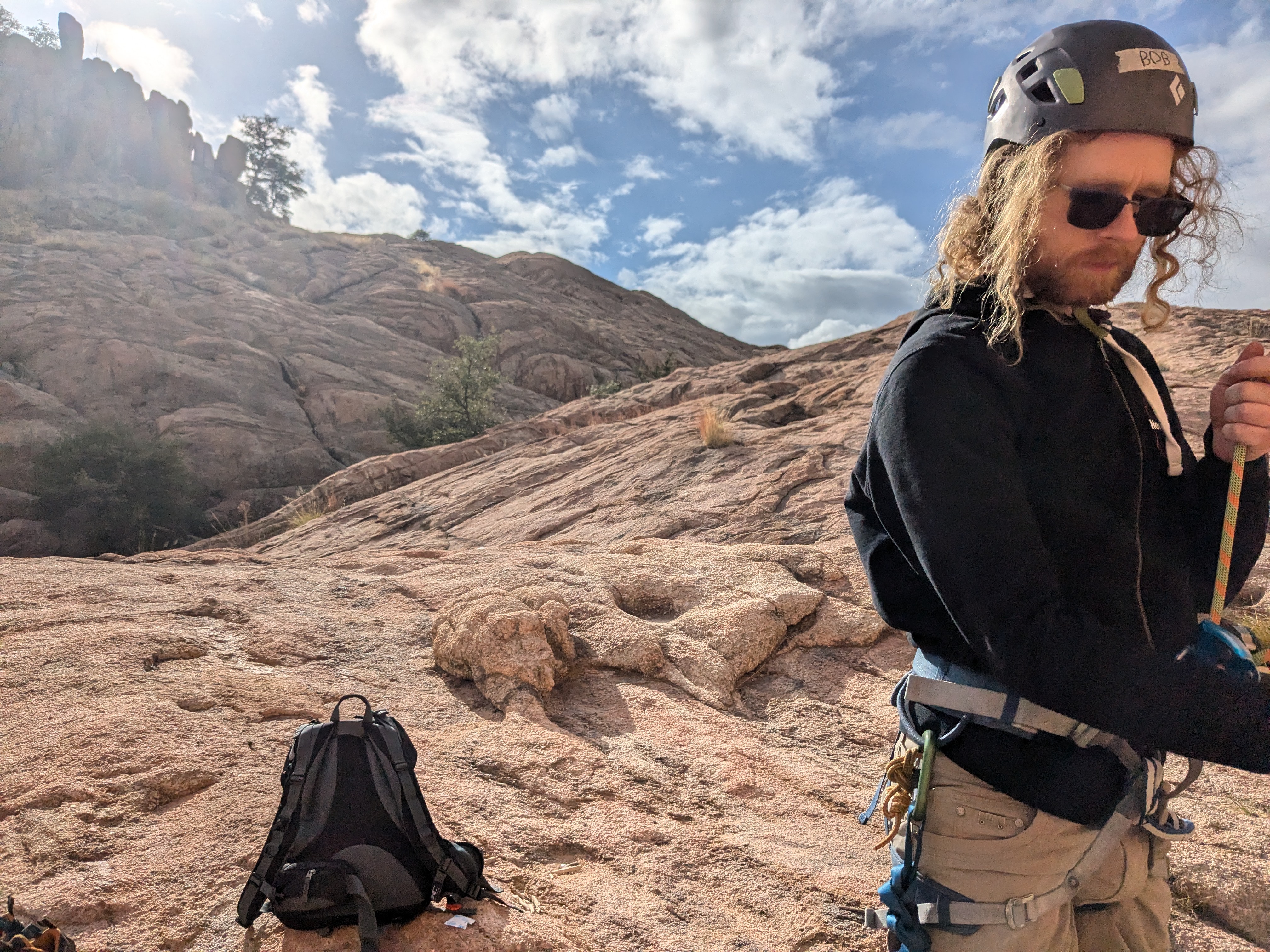
About a month ago, I traveled up north for the weekend to Prescott, Arizona, to do some mellow outdoor rock climbing and less mellow (below-freezing) camping with my partner Bob. I needed to be up there on Sunday because I was slated to volunteer with the Arizona Mountaineering Club for their outdoor school focused on building anchors. Anchors are meant to attach a climbing rope (or a climber) to a rock surface during rock climbing. The climbing rope is used as the climber’s lifeline, so learning how to ensure its safe placement and security is essential for climbing outdoors.
A good climbing anchor follows the acronym ERNEST, which stands for Equalized, Redundant, No Extension, Solid and Timely. Equalized means all components of the anchor distribute the load equally, redundant means if one component fails there is a backup, no extension means there shouldn’t be any shock-loading at any point, solid means each component is strong enough to hold an impact on its own, and timely means it can be put together quickly if necessary.



I’ve volunteered as the Community Outreach Coordinator for a while with the Arizona Women’s Climbing Coalition, another local climbing organization. The organization aims to empower women and genderqueer people through rock climbing. My role is to help connect the organization and its members to different aspects of the rock climbing community, like other local climbing organizations, local businesses, and national non-profits and brands. One more recent example includes my efforts to join forces with the Arizona Mountaineering Club. We plan to partner on a stewardship project by providing funding and volunteers.
Earlier this year, we were preparing for an annual fundraising film festival, and I was contacting the owner of a local mountain guiding company for donations. Mac McCaleb runs Granite Mountain Guides, based in Prescott, Arizona, but also leads the local climbing organization Prescott Climbers Coalition (PCC). Mac generously donated to our cause, and through our interactions, I learned about the PCC’s role in protecting an area outside of Prescott that has many uses – including recreational rock climbing and climbing instruction.

The campaign is called SaveSullivans and refers to Upper Sullivan’s Canyon, a significant land area because it is where the Verde River begins, right below the dam at Sullivan Lake. The Verde River is a tributary of the Salt River (which I wrote about here), and a portion of its 170 or so miles is protected through the National Wild and Scenic River program.
In the vicinity of Upper Sullivan’s Canyon, the area is designated as the Upper Verde River Conservation Opportunity Area (COA), by the Arizona Wildlife Conservation Strategy. The COA is a known Important Bird Area (IBA), comprising nearly 2000 acres of quality riparian habitat.
The land is also popular for outdoor recreation activities, including wildlife viewing, hiking, and – of course – rock climbing. My personal experience with rock climbing at Sullivan’s mainly includes its use as a natural “classroom” for rock climbing technique instruction through the Arizona Mountaineering Club (AMC). I have been involved with three courses there, once as a student and twice as an instructor, but the AMC has been using Sullivan’s to teach skills critical to the safe enjoyment of rock climbing in Arizona (and beyond) for decades. My last experience with the AMC occurred just one week following the celebration of the organization’s 60th “birthday.”

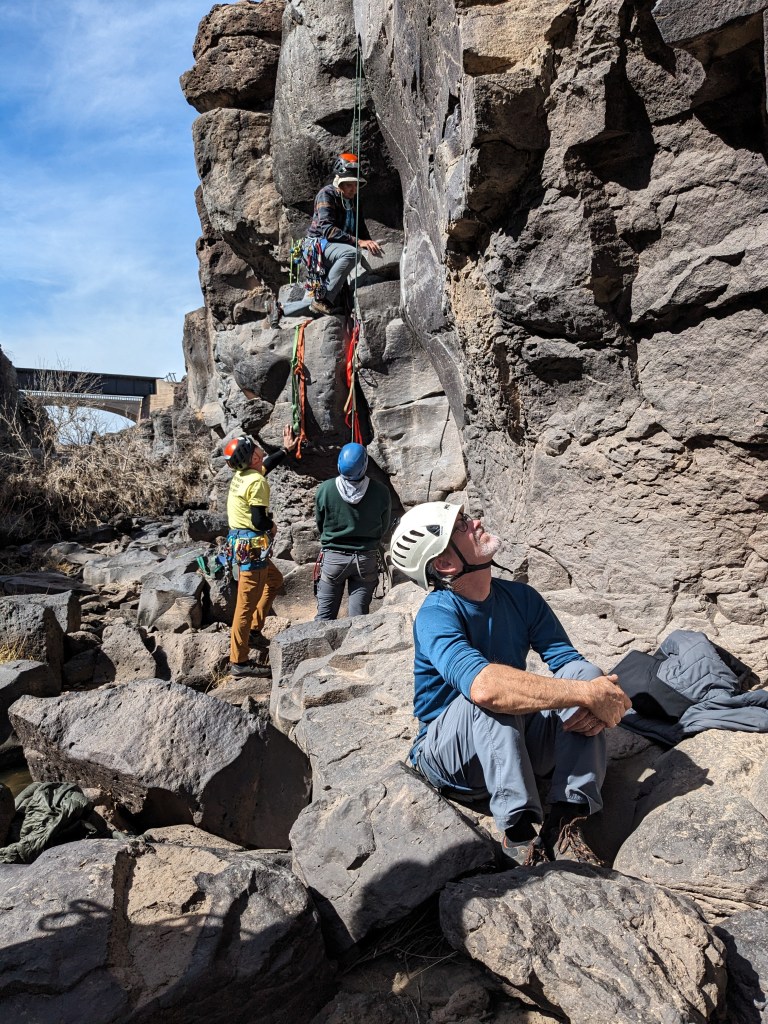

I’ve also tried climbing there – although the routes I attempted were quite tricky. The rock is something to be admired: it’s basalt, an extrusive igneous rock that is relatively young here – dated at only about 4.6 million years old! It is known as the Perkinsville Formation in this area. It consists of basalt flows from volcanic activity that followed the uplift of the Colorado Plateau – when deeply sourced material from a hot, upwelling mantle traveled upward through the crust, melting it and elevating it.

The physiographic region where Upper Sullivan’s Canyon is located is known as the “Transition Zone,” it denotes the boundary between the Colorado Plateau and the Basin and Range provinces. Therefore, geomorphic characteristics of both provinces are on display here, and the younger basaltic volcanism present in the area is likely due to late-stage, large-scale crustal extension associated with the formation of the Basin and Range. Much of the American Southwest was stretched about 12-8 million years ago, and subsequently faulted at a high angle, resulting in down-dropping basins filled with sediment adjacent to uplifted blocks forming the ranges.
What followed was a period that one of my colleagues likes to refer to as “Life After Faulting.” Landforms developed across the region as surface geomorphological features, like the Verde River, shaped the landscape. The section of the river that includes Upper Sullivan’s Canyon is a channel constricted by steep canyon walls due to the Verde River chewing downward into the uplifted landscape more recently (~2.5 million years ago).

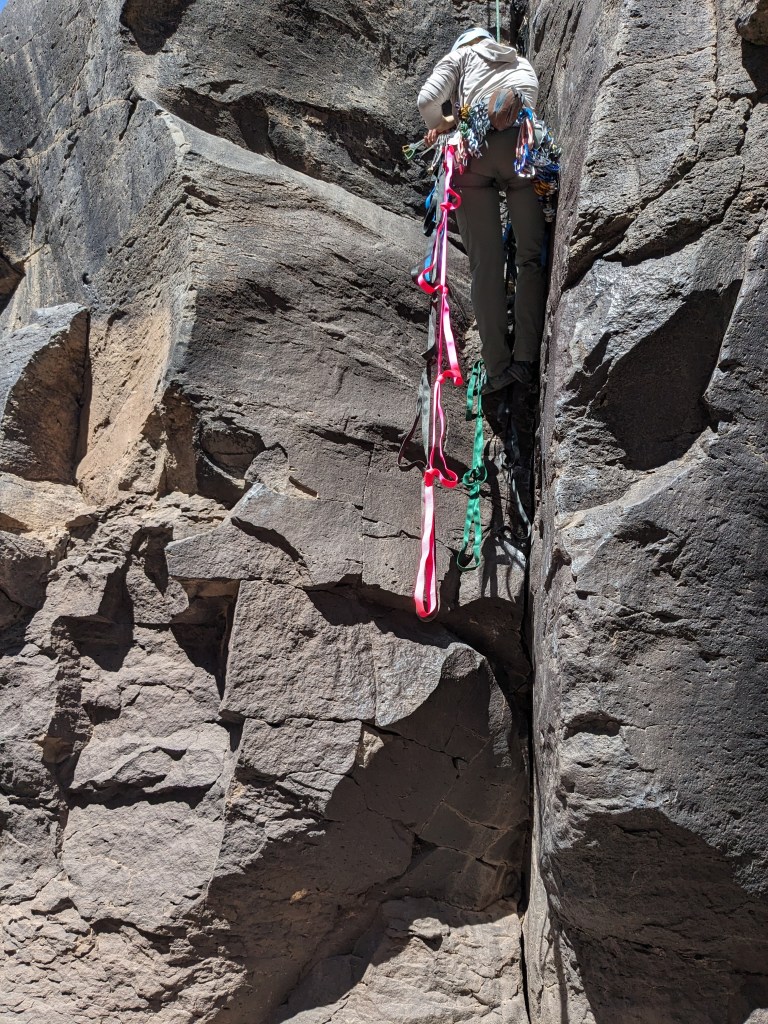
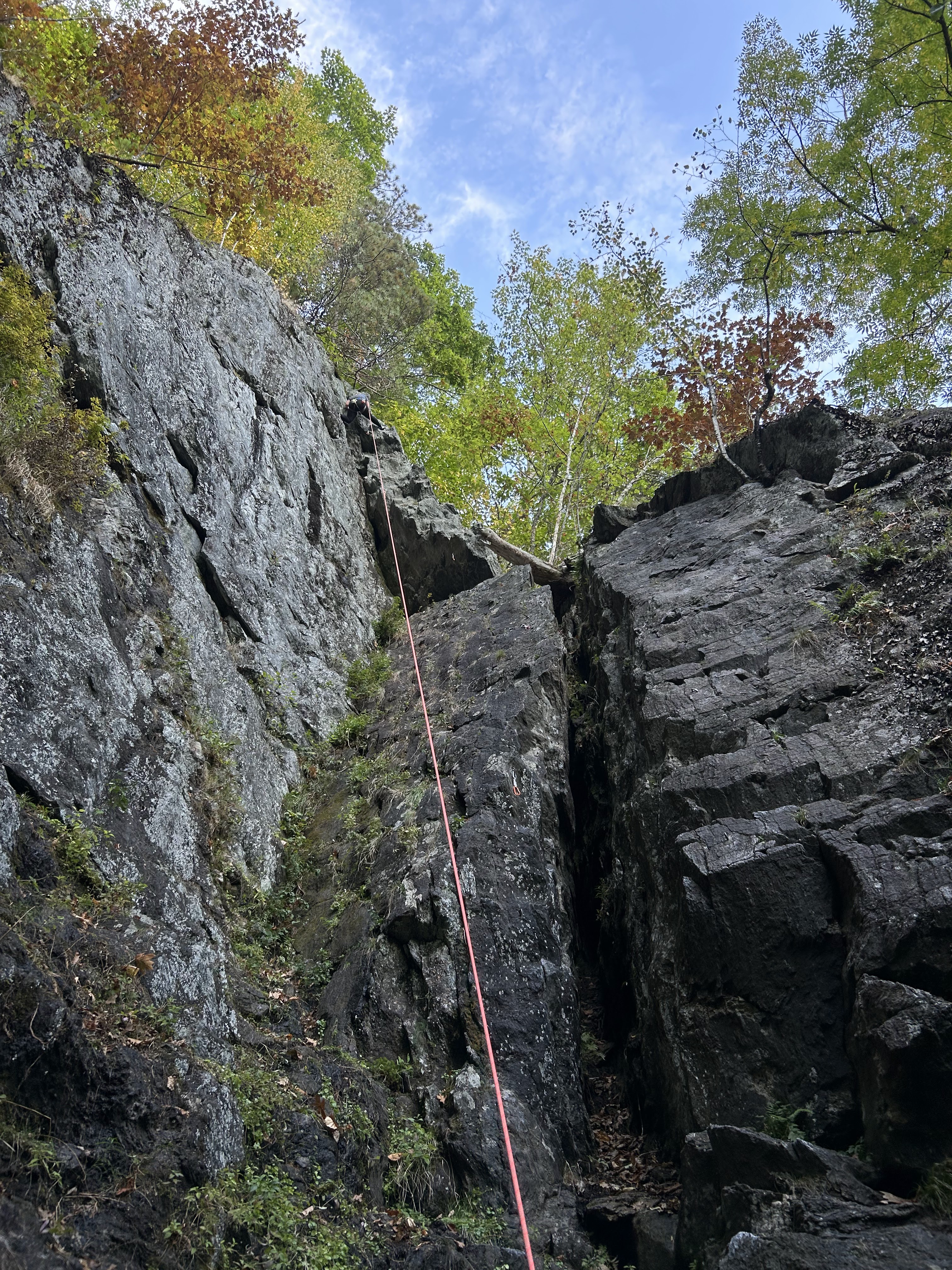
Exposure of these basalt cliffs has led to the area’s popularity for rock climbing today. Still, ancient features like columnar jointing in the rocks (see featured image, image above, and image to the right), make that climbing experience inherently more interesting. This distinctive pattern of vertical hexagonal prisms is due to contraction during the cooling of the lava flows. Another distinctive feature is its vesicular texture, a “swiss cheese” pattern of void spaces that form due to gases escaping from solution in the lavas when it erupted. The bubbles never got the chance to pop before the lava solidified, trapping these little gas pockets for us to observe millions of years later.
The geology of the Upper Verde River in and around Upper Sullivan’s Canyon has been found to impact the diversity of regional flora. Distinct species of plants correspond to different rock types. Of course, flora – in turn – impact the faunal diversity of the area, which includes “strategy species” of amphibians, birds, mammals, reptiles, and fish. One of my most pleasant experiences at Sullivan’s Canyon was observing a pair of majestic barn owls that seemed to be looking for a meal, perhaps rodents that indeed feed on the diverse vegetation there.
Beyond the ecological significance of Sullivan’s Canyon as a critical natural resource is its cultural and historical importance. Humans have found refuge here for a long time – as evidenced by petroglyphs and historical agricultural structures, including a few barns and a bunkhouse. I’ve only seen pictures of the petroglyphs, but I hope to learn more about them and find them on my next visit.
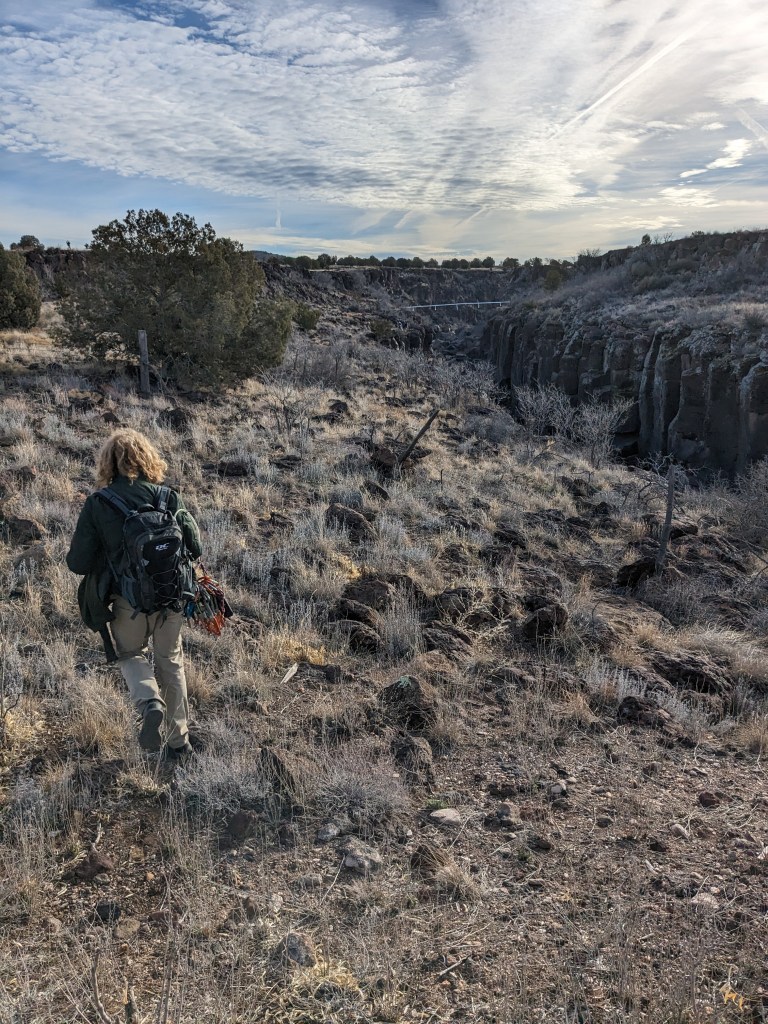
The SaveSullivans campaign is a worthy one. To preserve this critical natural resource – the “Gateway to the Upper Verde River” – is to ensure a flourishing ecosystem and secure the area for future generations. It is a place that combines the liberating power of nature and an intentional practice of keeping users educated and informed.


 OROGENY ODYSSEY